Nuria Monfort's manuscript
The Shadow of the WindNuria Monfort's manuscript is both a personal account and a carefully entrusted record: Nuria writes of her bond with Julian Carax, her awareness that Javier Fumero is closing in, and her hope that Daniel Sempere will carry their story forward. Its passage through several hands makes the manuscript a fragile alternative to official records that have concealed identities and deaths; its final appeal asks not merely to preserve the past, but to remember the people whom that past threatens to erase.
Form and Contents
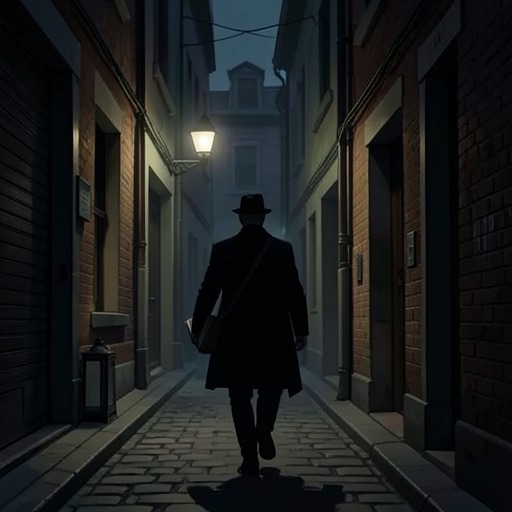
The manuscript is presented as pages written by Nuria and addressed, in effect, to Daniel. In its closing passages, she explains that she had long feared Fumero would eventually kill her, and that she had watched him wait for the moment to strike. She asks her father to make sure the pages reach Daniel if anything happens to her. The account therefore bears the pressure of an anticipated loss: its author is writing with the possibility that she will not be able to explain herself or say goodbye in person.
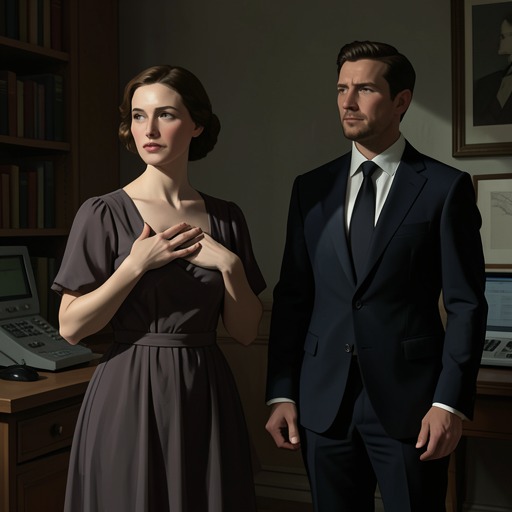
Nuria describes Daniel as someone Julian had come to watch with growing attention. Julian spoke to her about Daniel's friends, his father, and the women in his life, and Nuria says he spoke of Daniel as though he were his son. She connects this interest to Julian's changing attitude toward his books: he had stopped pursuing them in order to destroy them and was learning to see the world again through Daniel's eyes. The manuscript thus records not only Nuria's danger but a change in Julian, whose attention to Daniel becomes a way of recovering a lost part of himself.
Entrustment and the Threat of Loss
Nuria's decision to leave the pages with her father turns the manuscript into a message sent forward through uncertainty. She hopes Daniel will never need to read it, yet believes that handing on the story may be her fate and that Daniel's part will be to set it free. Her hope is qualified rather than triumphant: she calls hope cruel and without conscience, even as she continues to hope that Daniel might lose the trail and reach safety. This tension gives the manuscript its urgency. It is at once a record of what happened and a contingency plan for what may happen to its writer.
The pages also carry Nuria's apology on behalf of herself and Julian. She asks Daniel to forgive them, especially Julian, and to take care of him when she is no longer able to do so. Yet she recognizes that she cannot demand this of Daniel and instead asks him to save himself. Her closing request is smaller and more intimate than the burden she has placed on him: she asks to be remembered, even if only secretly and in a corner of his memory. The manuscript's account of danger therefore ends as an appeal for remembrance rather than a claim to rescue.
Material Journey and Documentary Counterpoint
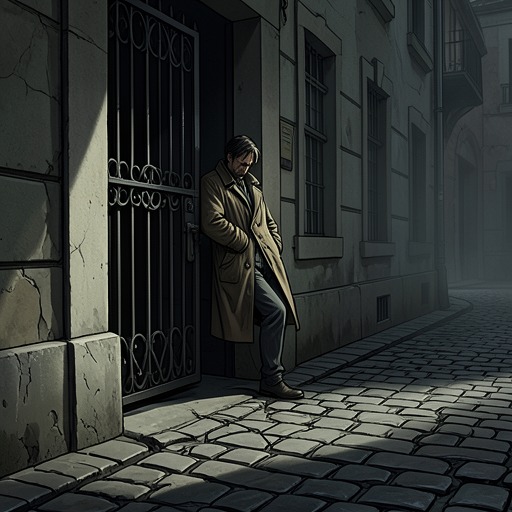
The manuscript's physical custody matters. After Daniel is seized in the snow, one of the men searching him finds the pages hidden inside his coat and takes them away. Daniel expects the attackers to be working for Fumero, but the person who has taken the manuscript is Fermín, who has come with Don Federico Flavia to rescue him. The pages are later found on Fermín's lap as he watches over the injured Daniel. Their recovery makes the manuscript part of the same chain of protection that carries Daniel out of danger.
That chain contrasts with the state's handling of Julian's supposed death. In the account of a 1936 morgue case, an unidentified body was accompanied by a passport and book; a police officer overrode the rules, assigned the body the identity he declared, and ordered its burial in a common grave. The later account explains that the body was actually Miquel Moliner's, but was registered as Julian Carax after Fumero signed the report. Against such documents, which can make a false identity official, Nuria's privately preserved pages offer testimony grounded in personal knowledge and entrusted relationships. The manuscript does not simply supplement the archive; it exposes how the archive can be made to conceal the truth.
Memory and Narrative Significance
Nuria's manuscript gives Daniel access to a history that its participants could not safely disclose in ordinary conversation. Her father, Isaac Monfort, recalls that Nuria visited him the afternoon before her death, as she had in earlier years, and that their conversations often turned to books. He produces an envelope while speaking with Daniel, connecting this last visit and the pages Nuria left behind to the manuscript's eventual delivery. The document therefore joins a father's belated act of trust to a daughter's attempt to make her story survive her.
The manuscript's governing idea is that people remain alive for as long as they are remembered. That conviction links its intimate plea to the larger pattern of false records, hidden histories, and threatened forgetting. Nuria asks Daniel to preserve her in memory, while also entrusting him with the story of Julian and with the hope that it can be released from silence. Its significance lies in this double work: it bears witness to Nuria's own life and helps restore a human account where official paperwork has imposed a misleading one.